Dry Needling: A Targeted Approach to Muscle Relief
What is Dry Needling?
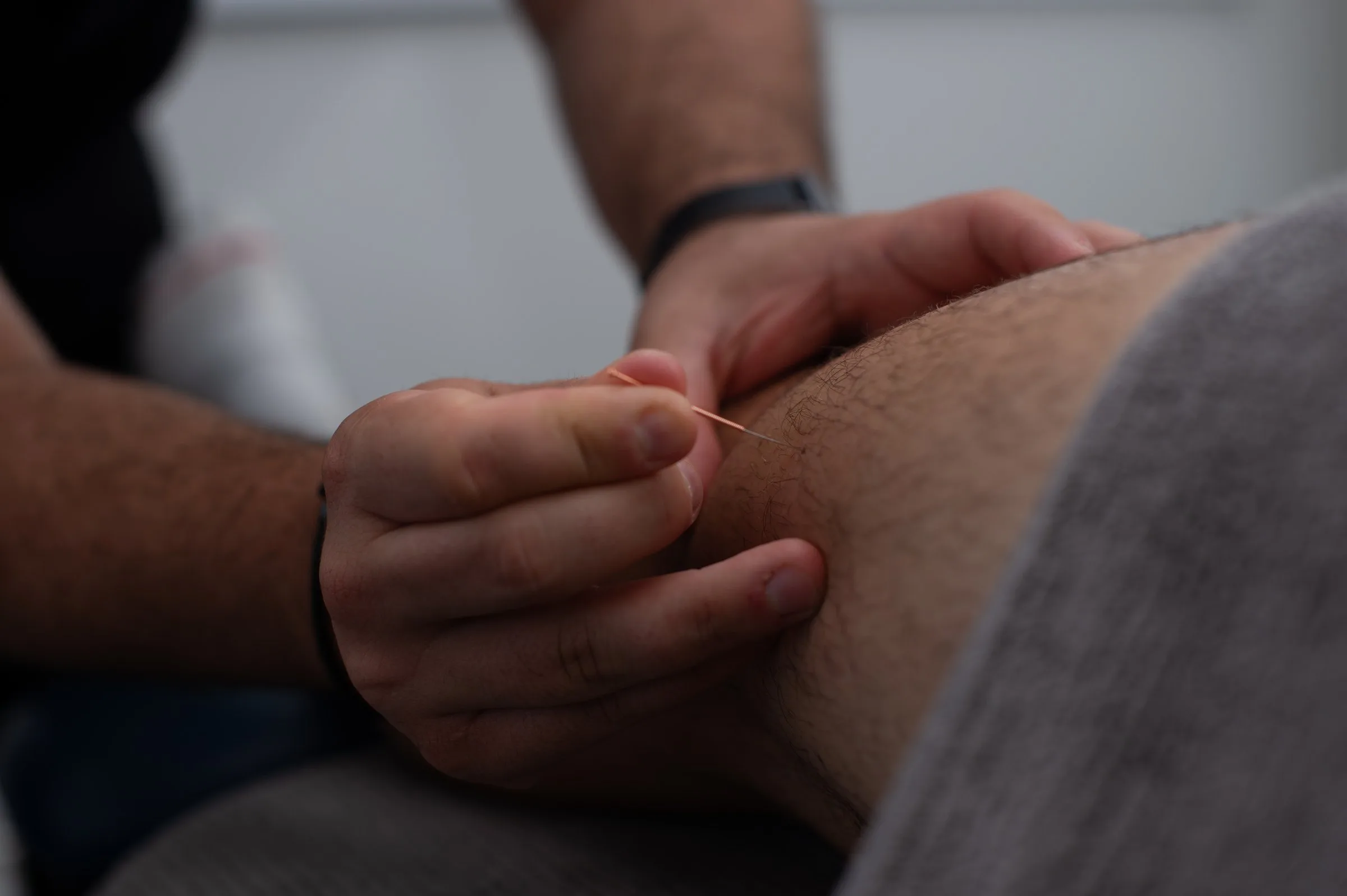
Dry needling is a procedure used at Gladesville Healthcare where a fine acupuncture needle is inserted into the muscle via the skin. These needles are strategically placed to address myofascial trigger points** in the muscles, taut, tight muscle fibres that are irritable and tender to touch.
During treatment, we may identify:
- Active trigger points**, which can cause pain, restricted movement, and muscle weakness.
- Latent trigger points**, which are generally painless unless stimulated, but can still contribute to movement dysfunction.
What Causes Trigger Points?
Research suggests that trigger points occur due to:
- Sustained postures (e.g., prolonged sitting at a desk)
- Repetitive low-load stress on muscles
- Unfamiliar movement or loading patterns
Pain associated with trigger points is often due to decreased blood flow and oxygen availability**, which activates pain receptors within the muscle, creating local tenderness and discomfort.
How Does Dry Needling Work?
The process of dry needling is simple and effective:
- The skin is sterilised.
- A small, fine acupuncture needle is inserted into the targeted muscle or trigger point.
- This may elicit a “twitch response”**, a quick muscle contraction that helps release tension.
- The needle remains in place for 5-10 minutes** before removal.
While the procedure is generally painless, some patients may feel a mild ache or twitch during treatment, both are normal responses that indicate the muscle is reacting.
The Role of Dry Needling in Treatment
At Gladesville Healthcare**, dry needling is rarely a standalone procedure. Instead, it is incorporated into a broader physical therapy plan by our:
- Chiropractors
- Physiotherapists
- Podiatrists (in certain cases)
It is often used alongside:
- Soft tissue therapy
- Joint mobilisation
- Rehabilitation exercises
- Postural education
Is Dry Needling Right for You?
If you’re struggling with muscle tightness, pain, or restricted movement**, dry needling may be an effective solution. Our experienced practitioners can assess your condition and determine if it’s the right approach for your treatment.
Want to learn more?** Contact us or ask your practitioner at your next appointment about how dry needling might help you.